Table of Contents
- A Guide to Commercial Construction Projects
- Understanding the Landscape: Commercial Projects vs. Legal Advocacy
- Planning Your Commercial Construction Project
- Navigating Regulations and Your Project Team
- Additional Considerations: Contractors, Permits, and Inspections
- Connecticut’s Commercial Construction Projects’ Landscape
When it comes to commercial construction projects, paving projects play a pivotal role in shaping the landscape of Connecticut’s business environment. If you’re a property owner looking to enhance your commercial space or a developer planning a new project, understanding the intricacies of commercial paving is essential.
In this comprehensive blog, we’ll explore the unique aspects of paving in Connecticut, differentiate between commercial construction projects and legal advocacy. This blog will provide practical insights for planning, navigating regulations, and executing successful projects. Let’s pave the way to your project’s success!

A Guide to Commercial Construction Projects
Commercial construction projects encompass a wide range of developments designed to enhance the functionality and aesthetics of business spaces. From office buildings to retail centers, the scope of these projects is vast. Paving, in particular, is a crucial element that ensures accessibility, safety, and visual appeal.
Understanding the basics of commercial construction is the first step in embarking on a successful paving project. These projects not only improve property value but also contribute to the overall infrastructure and economic growth of Connecticut.
Understanding the Landscape: Commercial Projects vs. Legal Advocacy
When discussing commercial construction in Connecticut, it’s important to distinguish between construction projects and legal advocacy initiatives. While both play significant roles in the state, their objectives and processes differ.
Connecticut Projects: Distinguishing Commercial Construction from Legal Initiatives
Commercial construction projects focus on physical developments, such as building new structures or enhancing existing ones. These projects require careful planning, adherence to regulations, and collaboration with various stakeholders. On the other hand, legal advocacy initiatives, like those undertaken by the Connecticut Legal Rights Project, aim to protect and promote the rights of individuals and communities through legal means.
Commercial Projects: The Engine of Economic Growth and Development
Commercial construction projects are vital for the economic growth and development of Connecticut. They create jobs, attract businesses, and stimulate local economies. Paving projects, in particular, enhance the functionality and accessibility of commercial spaces, making them more appealing to customers and tenants.
By investing in high-quality paving, property owners can ensure that their spaces are not only visually appealing but also safe and functional. This, in turn, contributes to the overall success and sustainability of commercial ventures in the state.
Planning Your Commercial Construction Project
Planning is the foundation of any successful commercial construction project. From conceptualization to execution, meticulous planning ensures that every aspect of the project aligns with your goals and complies with regulations.
Commercial Construction Projects: Types, Processes, and Considerations
Commercial construction projects vary in type and scale. They can include new constructions, renovations, or expansions. Regardless of the project’s nature, certain processes and considerations are common across the board.
Effective project planning involves setting clear objectives, defining budgets, and establishing timelines. It also requires identifying potential challenges and devising strategies to mitigate them.
You can ensure a smooth and successful project execution by addressing these aspects early on, and we are here to help you all the way, contact us.
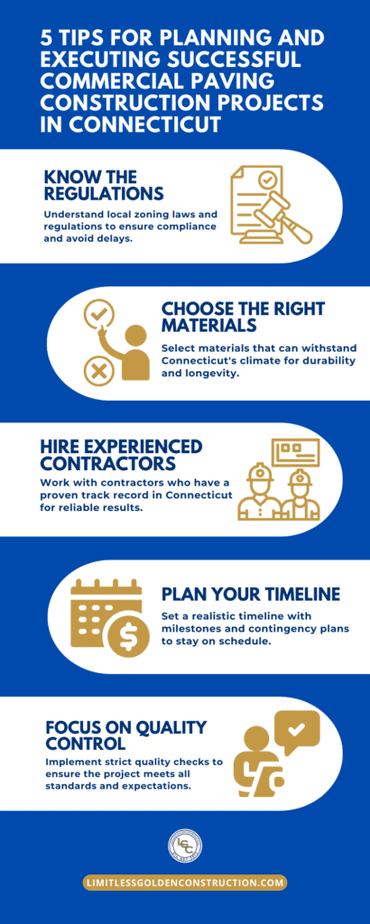
Navigating Regulations and Your Project Team
Regulations and a well-coordinated project team are key components of any commercial construction project. Understanding zoning laws, building codes, and the roles of various professionals is essential for compliance and efficiency.
Property Rules: Understanding Zoning Laws and Building Codes in Connecticut
Zoning laws and building codes dictate what can be built where and how structures should be constructed. In Connecticut, these regulations ensure that developments are safe, sustainable, and in harmony with the community.
Before commencing any paving project, it’s crucial to familiarize yourself with local zoning laws and building codes. This knowledge helps in obtaining necessary permits and avoiding potential legal issues down the line. Common zoning districts include residential, commercial, industrial, agricultural, and mixed-use. Each zoning district has a list of permissible land uses outlined in the zoning code. These uses can range from single-family residences, multifamily buildings, and commercial establishments to parks, schools, and industrial facilities.
In Limitless Golden Construction, we can help you know more about The Connecticut State Building Code that include:
- Adoption and Updates
- Applicability
- Code Enforcement
- Accessibility Standards
- Energy Conservation
- Fire Safety
- Code Enforcement Process
Do I Need an Architect? Understanding When Architectural Expertise is Necessary in Commercial Construction Projects
Not all commercial construction projects require an architect, but their expertise can be invaluable in many cases. Architects bring a unique perspective to the design and planning process, ensuring that the project is aesthetically pleasing and functional.
If your project involves complex designs, significant structural changes, or compliance with specific aesthetic guidelines, hiring an architect is advisable. Their input can enhance the overall quality and success of the project.
Difference Between Architect and Engineer: Their Roles in Commercial Construction Projects
Architects and engineers play distinct but complementary roles in commercial construction. While architects focus on the design and aesthetics of the project, engineers ensure its structural integrity and functionality.
Knowing the differences between these professions helps in assembling a well-rounded project team. Collaborating with both architects and engineers ensures that your paving project is not only visually appealing but also structurally sound.
Learn more about regulations and the perfect options for your project.
Additional Considerations: Contractors, Permits, and Inspections
Beyond planning and regulatory compliance, several additional considerations are crucial for the successful execution of commercial construction projects. With Limitless Golden Construction you are selecting the right experienced and reputable contractors, obtaining permits, and scheduling inspections which are all part of the process.
All this is essential for quality workmanship and timely project completion. Additionally, securing all necessary permits and ensuring regular inspections help in maintaining compliance and addressing any issues promptly.

Connecticut’s Commercial Construction Projects’ Landscape
In conclusion, commercial construction projects, particularly paving initiatives, are instrumental in shaping Connecticut’s business landscape. By understanding the nuances of commercial construction, differentiating it from legal advocacy, and meticulously planning your project, you can achieve remarkable results.
Navigating regulations, assembling a skilled project team, and considering additional factors such as contractors and permits are all integral to the success of your project. Remember, high-quality paving not only enhances the aesthetics and functionality of your commercial space but also contributes to the overall economic growth and development of Connecticut.
For personalized assistance and expert guidance on your paving project, consider booking a consultation with one of our experienced professionals. Together, we can pave the way to your project’s success and create a lasting impact on Connecticut’s commercial landscape!